Tag: financial planning

  • Personal Finance for Physicians A Guide to Financial Wellness

    Personal Finance for Physicians A Guide to Financial Wellness

    Suarapublik – Personal finance for physicians is a critical topic, given the unique financial challenges and opportunities that come with a career in medicine. Physicians face high educational debt, complex compensation structures, and significant income potential, making it essential to have a solid financial plan in place. This guide explores the key aspects of personal finance for physicians, from managing debt and building a strong foundation to investing for the future and planning for retirement.

    Navigating the financial landscape as a physician requires a thoughtful approach that considers both short-term and long-term goals. This guide aims to empower physicians with the knowledge and tools needed to make informed financial decisions, achieve financial stability, and secure their financial future.

    Array

    As a physician, you have a unique set of financial needs and opportunities. Your income potential is high, but so are your expenses, and your career path can be unpredictable. Therefore, building a strong financial foundation is essential to achieving your financial goals and securing your future.

    Creating a Comprehensive Financial Plan, Personal finance for physicians

    A financial plan is a roadmap that Artikels your financial goals and the steps you need to take to achieve them. It should consider your income, expenses, assets, liabilities, and risk tolerance. A well-crafted financial plan for physicians should address key areas like retirement planning, savings, investments, debt management, and estate planning.

    Sample Budget Template for Physicians

    CategoryAverage Monthly Expense
    Housing$2,000 – $5,000
    Transportation$500 – $1,500
    Food$500 – $1,000
    Healthcare$200 – $500
    Childcare$0 – $2,000
    Education$0 – $1,000
    Entertainment$200 – $500
    Savings$1,000 – $5,000
    Debt Repayment$0 – $2,000
    Other$0 – $1,000

    This is just a sample budget template, and your actual expenses may vary. It’s important to track your spending and adjust your budget accordingly.

    Key Financial Goals for Physicians

    • Retirement Planning: Physicians should start planning for retirement early to maximize their savings and investment growth. They can consider contributing to a 401(k) or 403(b) plan, which offers tax advantages.
    • Savings: Establishing an emergency fund with 3-6 months of living expenses is crucial for unexpected events. Physicians should also prioritize saving for short-term goals like a down payment on a house or a child’s education.
    • Investments: Investing in a diversified portfolio of stocks, bonds, and real estate can help physicians grow their wealth over the long term. They can consider working with a financial advisor to develop an investment strategy that aligns with their risk tolerance and financial goals.

    Essential Financial Resources and Tools for Physicians

    • Financial Advisor: A financial advisor can provide personalized advice and guidance on financial planning, investment strategies, and retirement planning.
    • Online Budgeting Tools: Tools like Mint or Personal Capital can help you track your spending, create a budget, and monitor your net worth.
    • Financial Literacy Resources: Organizations like the Financial Planning Association and the National Endowment for Financial Education offer educational resources and tools for physicians.
    • Professional Associations: Many medical associations offer financial planning resources and discounts on financial services for their members.

    Understanding the nuances of personal finance for physicians is crucial for achieving financial success and living a fulfilling life. By implementing the strategies Artikeld in this guide, physicians can effectively manage their finances, optimize their income, invest wisely, and plan for a secure and prosperous future. Remember, taking control of your financial well-being is an investment in your present and your future.

    Common Queries: Personal Finance For Physicians

    How can physicians maximize their retirement savings?

    Physicians can maximize their retirement savings by contributing the maximum amount allowed to tax-advantaged retirement accounts like 401(k)s and 403(b)s. They can also explore other options like Roth IRAs and traditional IRAs, depending on their financial situation and goals.

    What are some common financial mistakes physicians make?

    Common financial mistakes physicians make include failing to create a budget, overspending, neglecting to save for retirement, not investing wisely, and not seeking professional financial advice.

    What are some essential financial resources for physicians?

    Essential financial resources for physicians include financial advisors, certified public accountants (CPAs), and professional organizations that offer financial guidance and support.

    How can physicians protect themselves from financial risks?

    Physicians can protect themselves from financial risks by having adequate insurance coverage, including liability, disability, and life insurance. They should also consider diversifying their investments and seeking professional advice to manage their financial risks effectively.

  • Debt Consolidation A Path to Better Personal Finances

    Debt Consolidation A Path to Better Personal Finances

    Suarapublik – Debt consolidation personal finances can be a game-changer for individuals struggling with overwhelming debt. This strategy involves combining multiple debts into a single, more manageable loan, often with lower interest rates and monthly payments. By simplifying your debt obligations, you can gain control over your finances and work towards a brighter financial future.

    Debt consolidation can be a powerful tool for financial recovery, but it’s essential to understand its intricacies and potential pitfalls. This guide will delve into the different types of debt consolidation methods, their pros and cons, and how to navigate the process effectively. We’ll also explore alternative strategies for managing debt and provide valuable insights to help you make informed decisions.

    What is Debt Consolidation?

    Debt consolidation personal finances

    Debt consolidation is a strategy that combines multiple debts into a single loan with a lower interest rate. This can be a helpful tool for individuals struggling with high-interest debt, as it can simplify their repayment process and potentially save them money on interest charges.

    Benefits of Debt Consolidation

    Debt consolidation offers several benefits for individuals looking to improve their financial situation. Here are some of the key advantages:

    • Lower Monthly Payments: By combining multiple debts into one, individuals can often secure a lower interest rate, resulting in lower monthly payments. This can free up cash flow and make it easier to manage their finances.
    • Simplified Repayment: Consolidating debt into a single loan simplifies the repayment process, as individuals only need to track one payment instead of multiple. This can reduce confusion and stress associated with managing multiple debts.
    • Improved Credit Score: Making on-time payments on a consolidated loan can help improve an individual’s credit score. This can lead to better interest rates on future loans and credit cards.
    • Reduced Interest Charges: By securing a lower interest rate, individuals can significantly reduce the amount of interest they pay over the life of the loan. This can save them a substantial amount of money in the long run.

    Real-World Examples of Debt Consolidation

    Debt consolidation has helped many individuals improve their financial situations. Here are some real-world examples:

    • Sarah, a young professional, had accumulated credit card debt totaling $10,000 with high interest rates. She consolidated her debt into a personal loan with a lower interest rate, reducing her monthly payments by $200. This freed up cash flow for her to save for a down payment on a house.
    • John, a retired teacher, had several loans and credit card debt totaling $25,000. He consolidated his debt into a home equity loan with a lower interest rate, significantly reducing his monthly payments and allowing him to enjoy his retirement without financial stress.

    Types of Debt Consolidation

    Debt consolidation personal finances

    Debt consolidation is the process of combining multiple debts into a single loan with the aim of simplifying repayment and potentially lowering interest rates. This can be a beneficial strategy for individuals struggling with high-interest debt or managing multiple monthly payments. However, it’s essential to carefully consider the various types of debt consolidation methods and their implications before making a decision.

    Balance Transfers

    A balance transfer is a method of transferring outstanding balances from one credit card to another, often with a lower interest rate. This can be a useful option for individuals with high-interest credit card debt, allowing them to save money on interest charges.

    Advantages of Balance Transfers

    • Lower interest rates: Balance transfers typically offer lower interest rates compared to existing credit cards, reducing interest charges and accelerating debt repayment.
    • Simplified repayment: Combining multiple credit card balances into one reduces the number of monthly payments, simplifying debt management.
    • Introductory periods: Many balance transfer offers include introductory periods with 0% interest, allowing borrowers to focus on paying down the principal balance without accruing interest.

    Disadvantages of Balance Transfers

    • Balance transfer fees: Most balance transfer offers involve a fee, typically a percentage of the transferred balance. This fee can significantly impact the overall cost of debt consolidation.
    • Limited time: Introductory periods with 0% interest are usually temporary, after which the standard interest rate applies. Borrowers need to pay down a significant portion of the balance before the promotional period ends to avoid high interest charges.
    • Credit score impact: Applying for a new credit card can temporarily lower your credit score, as it involves a hard inquiry. This can affect your ability to qualify for other loans or credit lines.

    Eligibility Criteria for Balance Transfers

    To qualify for a balance transfer, borrowers typically need to meet the following criteria:

    • Good credit score: Credit card issuers prefer borrowers with good credit history, as it indicates a lower risk of default.
    • Available credit: The new credit card must have sufficient available credit to accommodate the transferred balance.
    • Meeting income requirements: Some issuers may have income requirements to ensure borrowers can manage the monthly payments.

    Debt Consolidation Loans

    A debt consolidation loan is a personal loan that combines multiple debts into a single loan with a fixed interest rate and a set repayment period. This option can be beneficial for individuals with various types of debt, including credit cards, medical bills, and personal loans.

    Advantages of Debt Consolidation Loans

    • Lower interest rates: Debt consolidation loans often offer lower interest rates compared to existing debts, especially high-interest credit cards. This can significantly reduce interest charges and shorten the repayment period.
    • Predictable payments: A debt consolidation loan provides a fixed monthly payment amount, making budgeting and debt management more predictable.
    • Simplified repayment: Combining multiple debts into one simplifies repayment, as borrowers only need to track a single loan and make one monthly payment.

    Disadvantages of Debt Consolidation Loans

    • Loan origination fees: Debt consolidation loans typically involve origination fees, which are a percentage of the loan amount. This fee can add to the overall cost of consolidation.
    • Longer repayment terms: While lower interest rates can be beneficial, debt consolidation loans often have longer repayment terms compared to existing debts. This can result in paying more interest over the life of the loan.
    • Credit score impact: Applying for a debt consolidation loan involves a hard inquiry, which can temporarily lower your credit score.

    Eligibility Criteria for Debt Consolidation Loans

    To qualify for a debt consolidation loan, borrowers typically need to meet the following criteria:

    • Good credit score: Lenders prefer borrowers with good credit history, as it indicates a lower risk of default.
    • Sufficient income: Lenders assess borrowers’ income to ensure they can afford the monthly loan payments.
    • Debt-to-income ratio: Lenders consider the borrower’s debt-to-income ratio, which is the percentage of their income used to pay debts. A lower ratio indicates a better ability to manage debt.

    Debt Management Plans, Debt consolidation personal finances

    A debt management plan (DMP) is a program offered by a credit counseling agency that helps individuals negotiate lower interest rates and monthly payments with creditors. This option can be beneficial for individuals with high-interest debt who are struggling to make payments.

    Advantages of Debt Management Plans

    • Lower interest rates: Credit counseling agencies can negotiate lower interest rates with creditors, reducing interest charges and accelerating debt repayment.
    • Reduced monthly payments: DMPs can help reduce monthly payments by consolidating debts into one monthly payment. This can make debt management more manageable.
    • Financial education: Credit counseling agencies provide financial education and guidance, helping individuals develop healthy financial habits and avoid future debt.

    Disadvantages of Debt Management Plans

    • Fees: Credit counseling agencies charge fees for their services, which can vary depending on the agency and the program.
    • Negative impact on credit score: While DMPs can help improve your credit score over time, they can initially have a negative impact as accounts are placed in a “payment plan” status.
    • Limited availability: DMPs are not available for all types of debt, and some creditors may not participate in the program.

    Eligibility Criteria for Debt Management Plans

    To qualify for a debt management plan, borrowers typically need to meet the following criteria:

    • Financial hardship: Credit counseling agencies assess borrowers’ financial situation to determine if they qualify for a DMP. This includes evaluating income, expenses, and debt levels.
    • Willingness to participate: Borrowers must be willing to follow the terms of the DMP, including making monthly payments and adhering to the agency’s guidelines.
    • Meeting income requirements: Some agencies may have income requirements to ensure borrowers can manage the monthly payments.

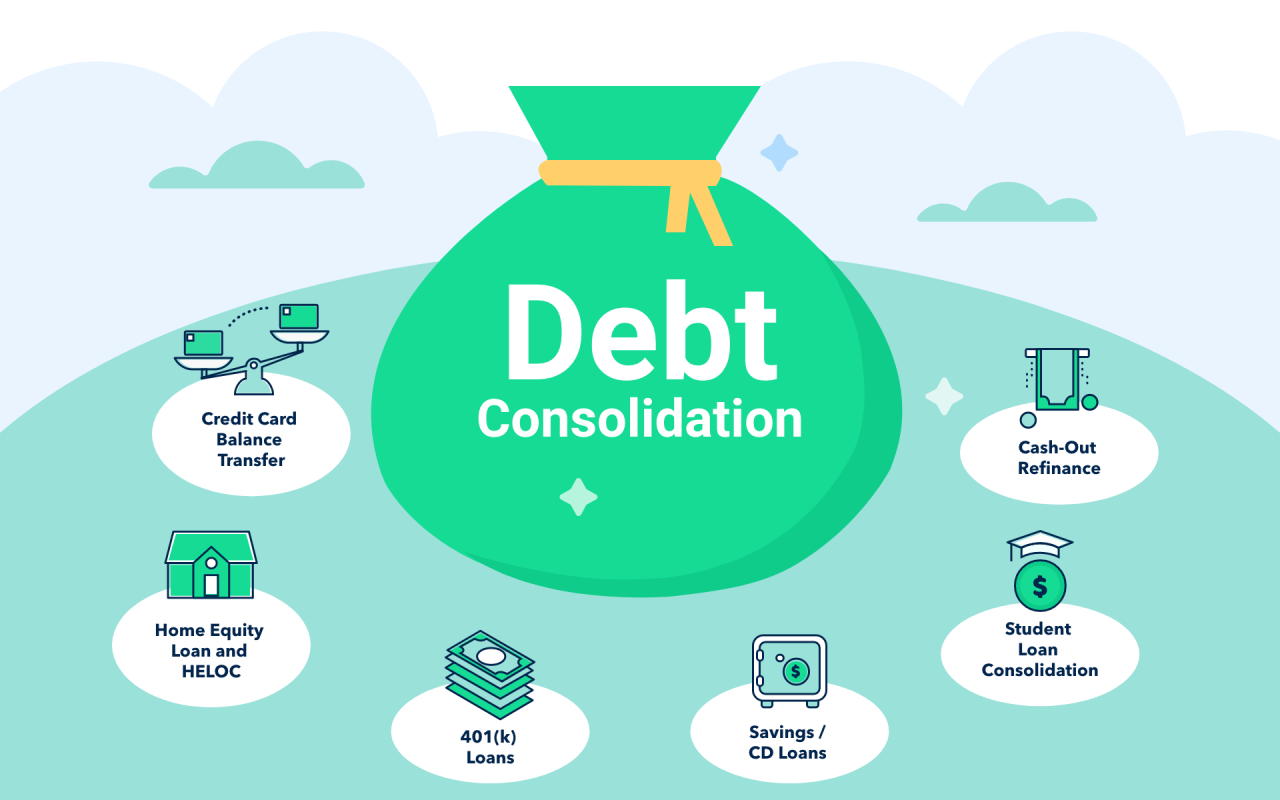
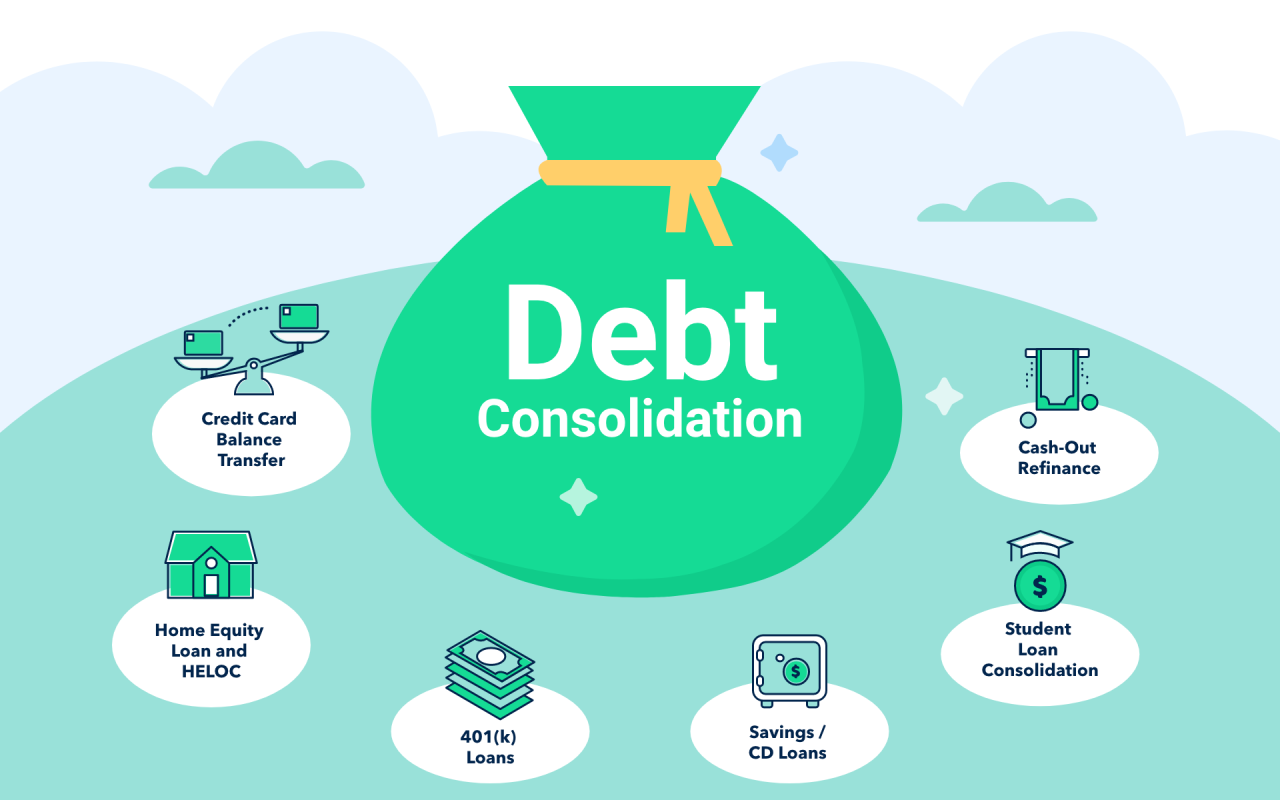
    ArrayDebt consolidation options consumers four top share

    Debt consolidation is a strategy that involves combining multiple debts into a single loan with a lower interest rate, making it easier to manage your repayments. It can be a helpful tool for individuals struggling with high-interest debt, but it’s essential to understand how it works before taking the plunge.

    Step-by-Step Process

    The process of debt consolidation typically involves several steps:

    • Assess your debt: The first step is to assess your current debt situation. Make a list of all your debts, including the amount owed, interest rates, and minimum monthly payments. This will give you a clear picture of your overall debt burden.
    • Determine your debt-to-income ratio (DTI): Your DTI is a crucial factor in debt consolidation. It’s calculated by dividing your monthly debt payments by your gross monthly income. Lenders typically prefer a DTI below 43%.
    • Check your credit score: A good credit score is essential for securing favorable terms on a debt consolidation loan. If your credit score is low, you may need to improve it before applying for a loan.
    • Explore debt consolidation options: There are several options available for debt consolidation, including personal loans, balance transfer credit cards, and debt management plans.
    • Compare loan offers: Once you’ve identified potential debt consolidation options, compare the interest rates, fees, and repayment terms. Choose the option that offers the most favorable terms and fits your financial situation.
    • Negotiate with creditors: If you’re considering a debt consolidation loan, it’s essential to negotiate with your creditors. They may be willing to lower your interest rates or waive some fees if you consolidate your debt.
    • Close your old accounts: Once you’ve secured a debt consolidation loan, close your old accounts. This will help prevent you from accumulating more debt and ensure you’re making payments on your new loan only.

    Credit Scores and Debt-to-Income Ratios

    Your credit score and debt-to-income ratio play a significant role in debt consolidation. Lenders use these factors to assess your creditworthiness and determine the interest rate and loan terms they offer. A higher credit score and lower DTI generally lead to more favorable loan terms.

    • Credit Score: A good credit score (generally above 670) can significantly impact your debt consolidation options. A higher score often translates to lower interest rates and more favorable loan terms.
    • Debt-to-Income Ratio: A lower DTI is generally preferred by lenders. A high DTI indicates that you’re already heavily burdened with debt, which can make lenders hesitant to provide you with a loan.

    Negotiating with Creditors

    Negotiating with creditors can be a challenging but potentially rewarding aspect of debt consolidation. Here are some tips for negotiating with your creditors:

    • Be prepared: Before you negotiate, gather all the necessary information, including your debt balances, interest rates, and payment history.
    • Be polite and professional: Maintain a respectful tone and avoid being aggressive or demanding.
    • Explain your situation: Explain your financial situation to your creditors and why you’re seeking debt consolidation.
    • Be willing to compromise: Be prepared to offer something in return for a lower interest rate or other concessions.
    • Get everything in writing: Once you reach an agreement, get it in writing to ensure both parties understand the terms.

    Taking control of your debt through consolidation can be a liberating experience, but it requires careful planning and execution. By understanding the different methods, weighing the pros and cons, and seeking professional guidance when needed, you can make informed decisions that pave the way for a more secure and prosperous financial future. Remember, knowledge is power, and armed with the right information, you can navigate the path to financial freedom with confidence.

    Commonly Asked Questions: Debt Consolidation Personal Finances

    What are the common types of debt consolidation?

    The most common types of debt consolidation include balance transfers, debt consolidation loans, and debt management plans. Each method has its own set of benefits and drawbacks, so it’s important to carefully consider your options.

    Is debt consolidation right for everyone?

    Debt consolidation is not a one-size-fits-all solution. It’s best suited for individuals with good credit scores and manageable debt levels. If you have a history of financial mismanagement or are struggling to make minimum payments, other strategies may be more appropriate.

    How can I find a reputable debt consolidation company?

    When choosing a debt consolidation company, it’s crucial to do your research and select a reputable provider. Look for companies with positive customer reviews, transparent fees, and a proven track record. You can also consult with a financial advisor or credit counselor for recommendations. (*)

  • Personal Finance Advisor Your Guide to Financial Success

    Personal Finance Advisor Your Guide to Financial Success

    Personal finance adviser – Personal finance advisors are your trusted partners in navigating the complex world of money management. They offer a comprehensive range of services, from crafting personalized financial plans to guiding you through investment decisions and tax strategies. Whether you’re aiming to build wealth, secure your future, or simply gain control over your finances, a skilled advisor can provide the expertise and support you need to achieve your goals.

    Think of a personal finance advisor as a financial coach, guiding you through every stage of your financial journey. They take the time to understand your unique circumstances, goals, and risk tolerance, tailoring their advice to your specific needs. From budgeting and saving to investing and retirement planning, they offer practical strategies and actionable insights to help you make informed financial decisions and achieve financial peace of mind.

    Managing Debt and Credit

    Financial advisor personal advisors career

    Debt can be a powerful tool for achieving financial goals, but it’s essential to manage it effectively to avoid overwhelming your finances. Uncontrolled debt can lead to stress, financial instability, and damage your credit score, limiting your access to future financial opportunities. This section explores strategies for managing debt effectively, improving your credit score, and navigating the complexities of credit.

    Strategies for Debt Management

    Managing debt effectively requires a strategic approach that encompasses debt consolidation, repayment, and credit score improvement.

    • Debt Consolidation: This strategy involves combining multiple debts into a single loan with a lower interest rate. This can simplify repayment and potentially save money on interest charges. However, it’s crucial to choose a consolidation loan with favorable terms and ensure you can make the monthly payments.
    • Debt Repayment: Prioritize repaying high-interest debts first, such as credit cards, as they accumulate interest quickly. Consider using the snowball or avalanche method to prioritize repayment based on the balance or interest rate, respectively.
    • Credit Score Improvement: A good credit score unlocks better interest rates on loans, credit cards, and other financial products. To improve your credit score, make payments on time, keep credit utilization low, and avoid opening too many new credit accounts.

    Creating a Debt Management Plan

    Developing a comprehensive debt management plan is crucial for taking control of your finances. This plan should include:

    1. Budgeting: Track your income and expenses to understand your financial situation and identify areas for potential savings. Use budgeting tools or apps to streamline this process.
    2. Negotiation: Contact your creditors to discuss options for lowering interest rates, reducing monthly payments, or extending repayment terms. Be prepared to negotiate and explore different solutions.
    3. Prioritization: Prioritize high-interest debts for faster repayment. Consider using the snowball or avalanche method to prioritize repayment based on the balance or interest rate, respectively.

    Impact of Credit Score on Financial Opportunities

    Your credit score significantly impacts your financial opportunities, including loan approvals, interest rates, and even job prospects.

    • Loan Approvals: Lenders use credit scores to assess your creditworthiness and determine whether to approve loan applications. A good credit score increases your chances of getting approved and securing favorable loan terms.
    • Interest Rates: A higher credit score often translates to lower interest rates on loans, credit cards, and mortgages. This can save you significant amounts of money over the life of the loan.

    Retirement Planning and Savings

    Personal finance adviser

    Retirement planning is crucial for ensuring financial security during your golden years. It involves carefully considering your savings goals, investment strategies, and retirement income projections.

    Retirement Savings Options

    Retirement savings options offer tax advantages and help you accumulate wealth for your retirement. Here are some popular choices:

    • 401(k)s: Offered by employers, these plans allow pre-tax contributions that grow tax-deferred. Some employers offer matching contributions, essentially free money for your retirement.
    • IRAs: These individual retirement accounts allow you to contribute pre-tax dollars that grow tax-deferred, with withdrawals taxed in retirement. There are two main types:
      • Traditional IRAs: Contributions may be tax-deductible, and withdrawals are taxed in retirement.
      • Roth IRAs: Contributions are made with after-tax dollars, and withdrawals are tax-free in retirement.

    Maximizing Retirement Savings

    Here are some strategies to maximize your retirement savings:

    • Start Early: The power of compounding works best over longer periods. The earlier you start saving, the more time your money has to grow.
    • Contribute Regularly: Even small, consistent contributions can add up significantly over time. Automate your contributions to ensure regular saving.
    • Increase Contributions Gradually: As your income grows, consider increasing your contribution percentage to accelerate your savings.
    • Take Advantage of Employer Matching: If your employer offers matching contributions, take full advantage of this free money.
    • Consider Diversification: Spread your investments across different asset classes, such as stocks, bonds, and real estate, to reduce risk.
    • Rebalance Regularly: Periodically adjust your investment portfolio to maintain your desired asset allocation and ensure your investments are aligned with your goals.

    ArrayPersonal finance adviser

    Tax planning is a crucial aspect of personal finance, as it can significantly impact your overall financial well-being. By strategically planning your tax obligations, you can minimize your tax liability and maximize your after-tax income. Effective tax planning involves understanding tax laws, exploring available deductions and credits, and implementing strategies throughout the year to optimize your tax position.

    Tax Deductions, Credits, and Exemptions, Personal finance adviser

    Tax deductions, credits, and exemptions offer various ways to reduce your taxable income, ultimately lowering your tax bill.

    • Tax Deductions: These are expenses that you can subtract from your taxable income, reducing the amount of income subject to tax. Examples include deductions for mortgage interest, charitable donations, and state and local taxes.
    • Tax Credits: These are direct reductions to your tax liability, providing a dollar-for-dollar reduction in the taxes you owe. Examples include the Earned Income Tax Credit, the Child Tax Credit, and the American Opportunity Tax Credit.
    • Tax Exemptions: These are amounts that are not subject to taxation, such as personal exemptions for yourself, your spouse, and dependents.

    Year-Round Tax Planning Strategies

    Effective tax planning is an ongoing process that requires attention throughout the year, not just during tax season. Here are some strategies to consider:

    • Track Expenses and Income: Maintain accurate records of your income and expenses, including medical expenses, charitable donations, and business expenses. This documentation will be essential when filing your taxes.
    • Maximize Retirement Contributions: Contributions to retirement accounts, such as 401(k)s and IRAs, are often tax-deductible, reducing your taxable income.
    • Consider Tax-Advantaged Investments: Explore investment options that offer tax advantages, such as municipal bonds and Roth IRAs.
    • Review Your Tax Withholding: Ensure your tax withholdings from your paycheck are accurate to avoid underpayment penalties.
    • Consult a Tax Professional: Seek professional advice from a tax advisor to ensure you are taking advantage of all available deductions and credits and to navigate complex tax situations.

    Ultimately, working with a personal finance advisor empowers you to take control of your financial future. They provide the knowledge, tools, and support you need to make smart financial decisions, manage your money effectively, and achieve your financial goals with confidence. By partnering with a trusted advisor, you can navigate the complexities of personal finance with greater clarity and peace of mind, knowing you’re on the right track to financial success.

    FAQ: Personal Finance Adviser

    What qualifications should I look for in a personal finance advisor?

    Look for advisors with relevant certifications like Certified Financial Planner (CFP), Chartered Financial Analyst (CFA), or Registered Investment Advisor (RIA). These designations indicate a high level of knowledge, experience, and adherence to ethical standards.

    How much does it cost to hire a personal finance advisor?

    Fees vary depending on the advisor’s experience, services offered, and the complexity of your financial situation. Some advisors charge hourly rates, while others use a percentage-based fee structure. It’s important to discuss fees upfront and ensure they align with your budget.

    What is the difference between a financial advisor and a financial planner?

    While the terms are often used interchangeably, a financial planner typically focuses on creating a comprehensive financial plan, covering aspects like budgeting, saving, investing, and retirement planning. A financial advisor may provide more specialized services, such as investment management or tax advice.

  • Online Personal Finance Advisor Your Guide to Financial Wellness

    Online Personal Finance Advisor Your Guide to Financial Wellness

    SuaraPublik – Online personal finance advisors have emerged as a powerful tool for individuals seeking to take control of their financial future. The demand for these services is growing rapidly, driven by factors like accessibility, affordability, and the constant evolution of technology. These platforms offer a range of services, from robo-advisors that automate investment strategies to comprehensive financial planning websites and online financial coaches who provide personalized guidance.

    Whether you’re just starting out on your financial journey or looking for ways to optimize your existing strategies, online personal finance advisors can be invaluable resources. They provide personalized financial plans, automated investing options, and 24/7 access to financial information, empowering individuals to make informed decisions about their money.

    Array

    The traditional model of personal finance advice, often associated with high fees and limited accessibility, is undergoing a significant transformation. The emergence of online personal finance advisors is revolutionizing how individuals manage their finances, offering a more convenient, affordable, and technology-driven approach.

    Factors Driving the Trend, Online personal finance advisor

    The increasing demand for online personal finance advice is driven by several key factors:

    • Accessibility: Online platforms are accessible from anywhere with an internet connection, breaking down geographical barriers and making financial advice available to a wider audience.
    • Affordability: Online advisors often offer lower fees compared to traditional advisors, making financial advice more accessible to individuals with different income levels.
    • Technological Advancements: The development of sophisticated algorithms and artificial intelligence (AI) has enabled online advisors to provide personalized financial guidance and automated investment management.

    Types of Online Personal Finance Advisors

    The online personal finance landscape is diverse, offering a range of services to meet different needs:

    • Robo-Advisors: These automated platforms use algorithms to create and manage investment portfolios based on an individual’s risk tolerance and financial goals. They typically offer low fees and a user-friendly interface.
    • Financial Planning Websites: These websites provide educational resources, tools, and calculators to help individuals understand and manage their finances. They may also offer access to certified financial planners for personalized advice.
    • Online Financial Coaches: These coaches provide personalized guidance and support to individuals working towards specific financial goals, such as debt reduction or saving for retirement. They may offer one-on-one consultations, group coaching sessions, or online courses.

    As the landscape of personal finance continues to evolve, online advisors are playing an increasingly important role in shaping the future of financial well-being. With their ability to personalize financial education, automate financial planning, and connect individuals with supportive online communities, these platforms are transforming the way we manage our money. By embracing the opportunities offered by online personal finance advisors, we can navigate the complexities of the modern financial world with confidence and achieve our financial goals.

    General Inquiries: Online Personal Finance Advisor

    What are the main differences between online and traditional financial advisors?

    Online advisors often offer lower fees and greater accessibility compared to traditional advisors. However, traditional advisors may provide more personalized attention and deeper expertise in complex financial situations.

    Are online personal finance advisors safe?

    Reputable online financial advisors prioritize security and privacy. Look for platforms with strong encryption, multi-factor authentication, and adherence to industry standards for data protection.

    How can I find the best online personal finance advisor for my needs?

    Consider your financial goals, investment philosophy, and risk tolerance. Research different platforms, compare their features, fees, and customer reviews to find the best fit. (*)


  • Sofi Personal Finance Managing Your Money Smarter

    Sofi Personal Finance Managing Your Money Smarter

    SuaraPublik – Sofi Personal Finance offers a comprehensive suite of tools and services designed to empower individuals to take control of their financial well-being. From budgeting and goal setting to investment management and loan products, Sofi provides a personalized approach to financial planning, catering to a wide range of needs and aspirations.

    The platform’s user-friendly interface and intuitive design make navigating complex financial concepts accessible to everyone, while its robust features and educational resources provide the tools and knowledge necessary to make informed financial decisions. Whether you’re looking to save for retirement, pay off debt, or simply gain a better understanding of your finances, Sofi offers a comprehensive solution to help you achieve your financial goals.

    User Experience and Customer Support

    Sofi

    Sofi Personal Finance aims to provide a seamless and user-friendly experience for managing your finances. The platform offers a range of features and functionalities designed to simplify financial management, but it’s important to consider both the positive and negative aspects based on user feedback.

    User Experience: Pros and Cons, Sofi personal finance

    User experience is a crucial aspect of any financial platform. Here’s a table summarizing the pros and cons of using Sofi Personal Finance based on user feedback:

    ProsCons
    Intuitive and user-friendly interfaceLimited customization options for dashboards and reports
    Comprehensive financial tracking and budgeting toolsSome users report occasional glitches or slow loading times
    Seamless integration with other Sofi products and servicesLimited support for international accounts and transactions
    Mobile app is convenient and feature-richLimited options for advanced financial analysis

    Customer Support Channels

    Sofi offers various customer support channels to assist users with any questions or concerns:

    ChannelDescription
    Live ChatAvailable 24/7 for immediate assistance with common issues.
    Phone SupportProvides direct assistance from a customer service representative.
    Email SupportFor inquiries that require a detailed response or follow-up.
    Help CenterA comprehensive knowledge base with articles, FAQs, and tutorials.

    Security Measures and Data Protection

    Sofi prioritizes the security of its users’ data and employs robust measures to protect sensitive information:

    “Sofi uses industry-standard encryption protocols to safeguard user data both in transit and at rest. We also have a multi-layered security system that includes firewalls, intrusion detection systems, and regular security audits.”

    Sofi adheres to strict data privacy regulations such as the General Data Protection Regulation (GDPR) and the California Consumer Privacy Act (CCPA). Users have control over their data and can access, modify, or delete their personal information at any time.

    Case Studies and Success Stories

    Sofi personal finance

    At Sofi, we understand that achieving financial goals can be challenging. Our mission is to empower individuals to take control of their financial future. We have helped countless people achieve their financial dreams, from paying off debt to saving for retirement. Here are some real-world examples of how Sofi has helped individuals achieve their financial goals.

    Success Stories of Sofi Users

    The success stories of Sofi users are a testament to the power of our platform and the commitment of our team. These individuals have achieved significant financial milestones by leveraging the tools and resources available through Sofi.

    • Sarah, a young professional, was struggling with student loan debt. She was making minimum payments and felt overwhelmed by the amount of debt she owed. She decided to use Sofi’s student loan refinancing program to lower her interest rate and monthly payments. Sarah was able to save thousands of dollars in interest and pay off her loans years earlier than expected. She is now on track to achieve her financial goals, including buying a home and starting a family.
    • John, a retiree, was concerned about running out of money in retirement. He had saved diligently throughout his career, but he was worried about inflation and the rising cost of healthcare. He decided to use Sofi’s retirement planning tools to create a personalized retirement plan. John was able to identify areas where he could make adjustments to his spending and investing, giving him peace of mind about his financial future. He is now confident that he will have enough money to live comfortably in retirement.
    • Maria, a single mother, was struggling to make ends meet. She was working two jobs and still had trouble covering her bills. She decided to use Sofi’s budgeting tools to track her spending and create a budget that worked for her. Maria was able to identify areas where she could cut back on her spending and save more money. She is now able to make ends meet and is even saving for her children’s college education.

    ArraySofi personal finance

    Sofi Personal Finance is at the forefront of the financial technology (fintech) revolution, constantly innovating and adapting to the changing landscape of personal finance. As the industry evolves, Sofi is poised to leverage emerging trends and technologies to enhance its services and offer a more personalized and seamless experience for its users.

    Emerging Trends in Personal Finance

    The personal finance industry is undergoing a period of rapid transformation, driven by several key trends that are shaping the way people manage their money.

    • Increased Demand for Personalized Financial Advice: Consumers are increasingly seeking personalized financial advice tailored to their specific needs and goals. This trend is fueled by the rise of digital financial platforms and the increasing availability of data that can be used to create personalized financial plans.
    • Growth of Fintech and Digital Banking: Fintech companies are disrupting traditional financial institutions by offering innovative products and services that are more accessible, affordable, and user-friendly. Digital banking is becoming increasingly popular, with consumers embracing mobile apps and online platforms for managing their finances.
    • Focus on Financial Wellness: There is a growing emphasis on financial wellness, with consumers seeking tools and resources to improve their financial literacy, manage debt, and achieve their financial goals. This trend is driving the development of financial education programs, budgeting tools, and other resources that promote financial well-being.
    • Integration of Artificial Intelligence (AI): AI is playing an increasingly important role in the personal finance industry, enabling companies to automate tasks, provide personalized recommendations, and improve customer service. AI-powered chatbots, for example, can provide instant support and answer customer queries 24/7.

    Role of Artificial Intelligence in Sofi

    Artificial intelligence has the potential to significantly enhance Sofi’s services and improve the overall user experience.

    • Personalized Financial Planning: AI can analyze user data, such as spending habits, income, and goals, to create personalized financial plans that are tailored to their individual needs. This can help users make informed financial decisions and achieve their financial goals more effectively.
    • Automated Financial Management: AI can automate tasks such as bill payments, budgeting, and investment management, freeing up users’ time and reducing the risk of errors. This can simplify financial management and make it more accessible to users of all levels of financial literacy.
    • Fraud Detection and Prevention: AI algorithms can be used to detect fraudulent transactions and prevent financial losses. This can enhance the security of Sofi’s platform and provide users with peace of mind.
    • Improved Customer Service: AI-powered chatbots can provide instant support and answer customer queries 24/7, improving customer satisfaction and reducing wait times. This can enhance the overall user experience and make Sofi more accessible to users.

    Sofi Personal Finance stands out as a modern and innovative solution for managing your money effectively. By combining cutting-edge technology with personalized financial guidance, Sofi empowers individuals to take control of their financial future and achieve their financial goals. Whether you’re a seasoned investor or just starting out, Sofi offers a valuable resource to help you navigate the complexities of personal finance with confidence and ease.

    FAQ Corner: Sofi Personal Finance

    Is Sofi Personal Finance free to use?

    Sofi Personal Finance offers a free basic plan with limited features. For access to premium features like advanced budgeting tools and personalized financial advice, a paid subscription is required.

    What are the minimum requirements for opening a Sofi account?

    To open a Sofi account, you typically need to be at least 18 years old, have a valid Social Security number, and be a U.S. resident. Specific requirements may vary depending on the product or service you’re interested in.

    How secure is my personal information with Sofi?

    Sofi prioritizes data security and employs industry-standard encryption and security measures to protect your personal information. They also comply with relevant data privacy regulations.  (*)


  • Debt Consolidation A Path to Better Personal Finances

    Debt Consolidation A Path to Better Personal Finances

    Suarapublik – Debt consolidation personal finances can be a game-changer for individuals struggling with overwhelming debt. This strategy involves combining multiple debts into a single, more manageable loan, often with lower interest rates and monthly payments. By simplifying your debt obligations, you can gain control over your finances and work towards a brighter financial future.

    Debt consolidation can be a powerful tool for financial recovery, but it’s essential to understand its intricacies and potential pitfalls. This guide will delve into the different types of debt consolidation methods, their pros and cons, and how to navigate the process effectively. We’ll also explore alternative strategies for managing debt and provide valuable insights to help you make informed decisions.

    What is Debt Consolidation?

    Debt consolidation personal finances

    Debt consolidation is a strategy that combines multiple debts into a single loan with a lower interest rate. This can be a helpful tool for individuals struggling with high-interest debt, as it can simplify their repayment process and potentially save them money on interest charges.

    Benefits of Debt Consolidation, Debt consolidation personal finances

    Debt consolidation offers several benefits for individuals looking to improve their financial situation. Here are some of the key advantages:

    • Lower Monthly Payments: By combining multiple debts into one, individuals can often secure a lower interest rate, resulting in lower monthly payments. This can free up cash flow and make it easier to manage their finances.
    • Simplified Repayment: Consolidating debt into a single loan simplifies the repayment process, as individuals only need to track one payment instead of multiple. This can reduce confusion and stress associated with managing multiple debts.
    • Improved Credit Score: Making on-time payments on a consolidated loan can help improve an individual’s credit score. This can lead to better interest rates on future loans and credit cards.
    • Reduced Interest Charges: By securing a lower interest rate, individuals can significantly reduce the amount of interest they pay over the life of the loan. This can save them a substantial amount of money in the long run.

    Real-World Examples of Debt Consolidation

    Debt consolidation has helped many individuals improve their financial situations. Here are some real-world examples:

    • Sarah, a young professional, had accumulated credit card debt totaling $10,000 with high interest rates. She consolidated her debt into a personal loan with a lower interest rate, reducing her monthly payments by $200. This freed up cash flow for her to save for a down payment on a house.
    • John, a retired teacher, had several loans and credit card debt totaling $25,000. He consolidated his debt into a home equity loan with a lower interest rate, significantly reducing his monthly payments and allowing him to enjoy his retirement without financial stress.

    Types of Debt Consolidation: Debt Consolidation Personal Finances

    Debt consolidation personal finances

    Debt consolidation is the process of combining multiple debts into a single loan with the aim of simplifying repayment and potentially lowering interest rates. This can be a beneficial strategy for individuals struggling with high-interest debt or managing multiple monthly payments. However, it’s essential to carefully consider the various types of debt consolidation methods and their implications before making a decision.

    Balance Transfers

    A balance transfer is a method of transferring outstanding balances from one credit card to another, often with a lower interest rate. This can be a useful option for individuals with high-interest credit card debt, allowing them to save money on interest charges.

    Advantages of Balance Transfers

    • Lower interest rates: Balance transfers typically offer lower interest rates compared to existing credit cards, reducing interest charges and accelerating debt repayment.
    • Simplified repayment: Combining multiple credit card balances into one reduces the number of monthly payments, simplifying debt management.
    • Introductory periods: Many balance transfer offers include introductory periods with 0% interest, allowing borrowers to focus on paying down the principal balance without accruing interest.

    Disadvantages of Balance Transfers

    • Balance transfer fees: Most balance transfer offers involve a fee, typically a percentage of the transferred balance. This fee can significantly impact the overall cost of debt consolidation.
    • Limited time: Introductory periods with 0% interest are usually temporary, after which the standard interest rate applies. Borrowers need to pay down a significant portion of the balance before the promotional period ends to avoid high interest charges.
    • Credit score impact: Applying for a new credit card can temporarily lower your credit score, as it involves a hard inquiry. This can affect your ability to qualify for other loans or credit lines.

    Eligibility Criteria for Balance Transfers

    To qualify for a balance transfer, borrowers typically need to meet the following criteria:

    • Good credit score: Credit card issuers prefer borrowers with good credit history, as it indicates a lower risk of default.
    • Available credit: The new credit card must have sufficient available credit to accommodate the transferred balance.
    • Meeting income requirements: Some issuers may have income requirements to ensure borrowers can manage the monthly payments.

    Debt Consolidation Loans

    A debt consolidation loan is a personal loan that combines multiple debts into a single loan with a fixed interest rate and a set repayment period. This option can be beneficial for individuals with various types of debt, including credit cards, medical bills, and personal loans.

    Advantages of Debt Consolidation Loans

    • Lower interest rates: Debt consolidation loans often offer lower interest rates compared to existing debts, especially high-interest credit cards. This can significantly reduce interest charges and shorten the repayment period.
    • Predictable payments: A debt consolidation loan provides a fixed monthly payment amount, making budgeting and debt management more predictable.
    • Simplified repayment: Combining multiple debts into one simplifies repayment, as borrowers only need to track a single loan and make one monthly payment.

    Disadvantages of Debt Consolidation Loans

    • Loan origination fees: Debt consolidation loans typically involve origination fees, which are a percentage of the loan amount. This fee can add to the overall cost of consolidation.
    • Longer repayment terms: While lower interest rates can be beneficial, debt consolidation loans often have longer repayment terms compared to existing debts. This can result in paying more interest over the life of the loan.
    • Credit score impact: Applying for a debt consolidation loan involves a hard inquiry, which can temporarily lower your credit score.

    Eligibility Criteria for Debt Consolidation Loans

    To qualify for a debt consolidation loan, borrowers typically need to meet the following criteria:

    • Good credit score: Lenders prefer borrowers with good credit history, as it indicates a lower risk of default.
    • Sufficient income: Lenders assess borrowers’ income to ensure they can afford the monthly loan payments.
    • Debt-to-income ratio: Lenders consider the borrower’s debt-to-income ratio, which is the percentage of their income used to pay debts. A lower ratio indicates a better ability to manage debt.

    Debt Management Plans

    A debt management plan (DMP) is a program offered by a credit counseling agency that helps individuals negotiate lower interest rates and monthly payments with creditors. This option can be beneficial for individuals with high-interest debt who are struggling to make payments.

    Advantages of Debt Management Plans

    • Lower interest rates: Credit counseling agencies can negotiate lower interest rates with creditors, reducing interest charges and accelerating debt repayment.
    • Reduced monthly payments: DMPs can help reduce monthly payments by consolidating debts into one monthly payment. This can make debt management more manageable.
    • Financial education: Credit counseling agencies provide financial education and guidance, helping individuals develop healthy financial habits and avoid future debt.

    Disadvantages of Debt Management Plans

    • Fees: Credit counseling agencies charge fees for their services, which can vary depending on the agency and the program.
    • Negative impact on credit score: While DMPs can help improve your credit score over time, they can initially have a negative impact as accounts are placed in a “payment plan” status.
    • Limited availability: DMPs are not available for all types of debt, and some creditors may not participate in the program.

    Eligibility Criteria for Debt Management Plans

    To qualify for a debt management plan, borrowers typically need to meet the following criteria:

    • Financial hardship: Credit counseling agencies assess borrowers’ financial situation to determine if they qualify for a DMP. This includes evaluating income, expenses, and debt levels.
    • Willingness to participate: Borrowers must be willing to follow the terms of the DMP, including making monthly payments and adhering to the agency’s guidelines.
    • Meeting income requirements: Some agencies may have income requirements to ensure borrowers can manage the monthly payments.

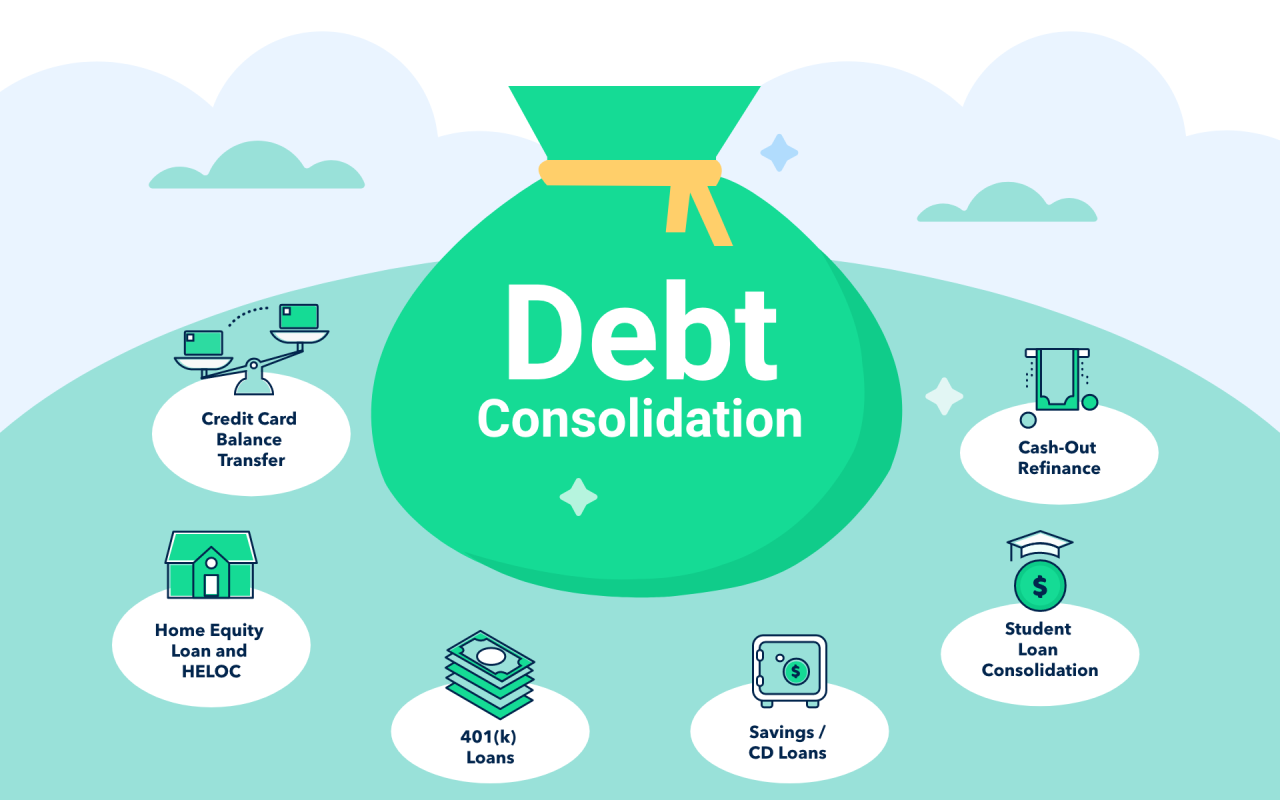
    ArrayDebt consolidation options consumers four top share

    Debt consolidation is a strategy that involves combining multiple debts into a single loan with a lower interest rate, making it easier to manage your repayments. It can be a helpful tool for individuals struggling with high-interest debt, but it’s essential to understand how it works before taking the plunge.

    Step-by-Step Process

    The process of debt consolidation typically involves several steps:

    • Assess your debt: The first step is to assess your current debt situation. Make a list of all your debts, including the amount owed, interest rates, and minimum monthly payments. This will give you a clear picture of your overall debt burden.
    • Determine your debt-to-income ratio (DTI): Your DTI is a crucial factor in debt consolidation. It’s calculated by dividing your monthly debt payments by your gross monthly income. Lenders typically prefer a DTI below 43%.
    • Check your credit score: A good credit score is essential for securing favorable terms on a debt consolidation loan. If your credit score is low, you may need to improve it before applying for a loan.
    • Explore debt consolidation options: There are several options available for debt consolidation, including personal loans, balance transfer credit cards, and debt management plans.
    • Compare loan offers: Once you’ve identified potential debt consolidation options, compare the interest rates, fees, and repayment terms. Choose the option that offers the most favorable terms and fits your financial situation.
    • Negotiate with creditors: If you’re considering a debt consolidation loan, it’s essential to negotiate with your creditors. They may be willing to lower your interest rates or waive some fees if you consolidate your debt.
    • Close your old accounts: Once you’ve secured a debt consolidation loan, close your old accounts. This will help prevent you from accumulating more debt and ensure you’re making payments on your new loan only.

    Credit Scores and Debt-to-Income Ratios

    Your credit score and debt-to-income ratio play a significant role in debt consolidation. Lenders use these factors to assess your creditworthiness and determine the interest rate and loan terms they offer. A higher credit score and lower DTI generally lead to more favorable loan terms.

    • Credit Score: A good credit score (generally above 670) can significantly impact your debt consolidation options. A higher score often translates to lower interest rates and more favorable loan terms.
    • Debt-to-Income Ratio: A lower DTI is generally preferred by lenders. A high DTI indicates that you’re already heavily burdened with debt, which can make lenders hesitant to provide you with a loan.

    Negotiating with Creditors

    Negotiating with creditors can be a challenging but potentially rewarding aspect of debt consolidation. Here are some tips for negotiating with your creditors:

    • Be prepared: Before you negotiate, gather all the necessary information, including your debt balances, interest rates, and payment history.
    • Be polite and professional: Maintain a respectful tone and avoid being aggressive or demanding.
    • Explain your situation: Explain your financial situation to your creditors and why you’re seeking debt consolidation.
    • Be willing to compromise: Be prepared to offer something in return for a lower interest rate or other concessions.
    • Get everything in writing: Once you reach an agreement, get it in writing to ensure both parties understand the terms.

    Taking control of your debt through consolidation can be a liberating experience, but it requires careful planning and execution. By understanding the different methods, weighing the pros and cons, and seeking professional guidance when needed, you can make informed decisions that pave the way for a more secure and prosperous financial future. Remember, knowledge is power, and armed with the right information, you can navigate the path to financial freedom with confidence.

    Commonly Asked Questions

    What are the common types of debt consolidation?

    The most common types of debt consolidation include balance transfers, debt consolidation loans, and debt management plans. Each method has its own set of benefits and drawbacks, so it’s important to carefully consider your options.

    Is debt consolidation right for everyone?

    Debt consolidation is not a one-size-fits-all solution. It’s best suited for individuals with good credit scores and manageable debt levels. If you have a history of financial mismanagement or are struggling to make minimum payments, other strategies may be more appropriate.

    How can I find a reputable debt consolidation company?

    When choosing a debt consolidation company, it’s crucial to do your research and select a reputable provider. Look for companies with positive customer reviews, transparent fees, and a proven track record. You can also consult with a financial advisor or credit counselor for recommendations.

  • Debt Consolidation A Path to Better Personal Finances

    Debt Consolidation A Path to Better Personal Finances

    Suara Publik – Debt consolidation personal finances can be a game-changer for individuals struggling with overwhelming debt. This strategy involves combining multiple debts into a single, more manageable loan, often with lower interest rates and monthly payments. By simplifying your debt obligations, you can gain control over your finances and work towards a brighter financial future.

    Debt consolidation can be a powerful tool for financial recovery, but it’s essential to understand its intricacies and potential pitfalls. This guide will delve into the different types of debt consolidation methods, their pros and cons, and how to navigate the process effectively. We’ll also explore alternative strategies for managing debt and provide valuable insights to help you make informed decisions.

    What is Debt Consolidation?

    Debt consolidation options consumers four top share

    Debt consolidation is a strategy that combines multiple debts into a single loan with a lower interest rate. This can be a helpful tool for individuals struggling with high-interest debt, as it can simplify their repayment process and potentially save them money on interest charges.

    Benefits of Debt Consolidation

    Debt consolidation offers several benefits for individuals looking to improve their financial situation. Here are some of the key advantages:

    • Lower Monthly Payments: By combining multiple debts into one, individuals can often secure a lower interest rate, resulting in lower monthly payments. This can free up cash flow and make it easier to manage their finances.
    • Simplified Repayment: Consolidating debt into a single loan simplifies the repayment process, as individuals only need to track one payment instead of multiple. This can reduce confusion and stress associated with managing multiple debts.
    • Improved Credit Score: Making on-time payments on a consolidated loan can help improve an individual’s credit score. This can lead to better interest rates on future loans and credit cards.
    • Reduced Interest Charges: By securing a lower interest rate, individuals can significantly reduce the amount of interest they pay over the life of the loan. This can save them a substantial amount of money in the long run.

    Real-World Examples of Debt Consolidation

    Debt consolidation has helped many individuals improve their financial situations. Here are some real-world examples:

    • Sarah, a young professional, had accumulated credit card debt totaling $10,000 with high interest rates. She consolidated her debt into a personal loan with a lower interest rate, reducing her monthly payments by $200. This freed up cash flow for her to save for a down payment on a house.
    • John, a retired teacher, had several loans and credit card debt totaling $25,000. He consolidated his debt into a home equity loan with a lower interest rate, significantly reducing his monthly payments and allowing him to enjoy his retirement without financial stress.

    Types of Debt Consolidation: Debt Consolidation Personal Finances

    Debt consolidation personal finances

    Debt consolidation is the process of combining multiple debts into a single loan with the aim of simplifying repayment and potentially lowering interest rates. This can be a beneficial strategy for individuals struggling with high-interest debt or managing multiple monthly payments. However, it’s essential to carefully consider the various types of debt consolidation methods and their implications before making a decision.

    Balance Transfers, Debt consolidation personal finances

    A balance transfer is a method of transferring outstanding balances from one credit card to another, often with a lower interest rate. This can be a useful option for individuals with high-interest credit card debt, allowing them to save money on interest charges.

    Advantages of Balance Transfers

    • Lower interest rates: Balance transfers typically offer lower interest rates compared to existing credit cards, reducing interest charges and accelerating debt repayment.
    • Simplified repayment: Combining multiple credit card balances into one reduces the number of monthly payments, simplifying debt management.
    • Introductory periods: Many balance transfer offers include introductory periods with 0% interest, allowing borrowers to focus on paying down the principal balance without accruing interest.

    Disadvantages of Balance Transfers

    • Balance transfer fees: Most balance transfer offers involve a fee, typically a percentage of the transferred balance. This fee can significantly impact the overall cost of debt consolidation.
    • Limited time: Introductory periods with 0% interest are usually temporary, after which the standard interest rate applies. Borrowers need to pay down a significant portion of the balance before the promotional period ends to avoid high interest charges.
    • Credit score impact: Applying for a new credit card can temporarily lower your credit score, as it involves a hard inquiry. This can affect your ability to qualify for other loans or credit lines.

    Eligibility Criteria for Balance Transfers

    To qualify for a balance transfer, borrowers typically need to meet the following criteria:

    • Good credit score: Credit card issuers prefer borrowers with good credit history, as it indicates a lower risk of default.
    • Available credit: The new credit card must have sufficient available credit to accommodate the transferred balance.
    • Meeting income requirements: Some issuers may have income requirements to ensure borrowers can manage the monthly payments.

    Debt Consolidation Loans

    A debt consolidation loan is a personal loan that combines multiple debts into a single loan with a fixed interest rate and a set repayment period. This option can be beneficial for individuals with various types of debt, including credit cards, medical bills, and personal loans.

    Advantages of Debt Consolidation Loans

    • Lower interest rates: Debt consolidation loans often offer lower interest rates compared to existing debts, especially high-interest credit cards. This can significantly reduce interest charges and shorten the repayment period.
    • Predictable payments: A debt consolidation loan provides a fixed monthly payment amount, making budgeting and debt management more predictable.
    • Simplified repayment: Combining multiple debts into one simplifies repayment, as borrowers only need to track a single loan and make one monthly payment.

    Disadvantages of Debt Consolidation Loans

    • Loan origination fees: Debt consolidation loans typically involve origination fees, which are a percentage of the loan amount. This fee can add to the overall cost of consolidation.
    • Longer repayment terms: While lower interest rates can be beneficial, debt consolidation loans often have longer repayment terms compared to existing debts. This can result in paying more interest over the life of the loan.
    • Credit score impact: Applying for a debt consolidation loan involves a hard inquiry, which can temporarily lower your credit score.

    Eligibility Criteria for Debt Consolidation Loans

    To qualify for a debt consolidation loan, borrowers typically need to meet the following criteria:

    • Good credit score: Lenders prefer borrowers with good credit history, as it indicates a lower risk of default.
    • Sufficient income: Lenders assess borrowers’ income to ensure they can afford the monthly loan payments.
    • Debt-to-income ratio: Lenders consider the borrower’s debt-to-income ratio, which is the percentage of their income used to pay debts. A lower ratio indicates a better ability to manage debt.

    Debt Management Plans

    A debt management plan (DMP) is a program offered by a credit counseling agency that helps individuals negotiate lower interest rates and monthly payments with creditors. This option can be beneficial for individuals with high-interest debt who are struggling to make payments.

    Advantages of Debt Management Plans

    • Lower interest rates: Credit counseling agencies can negotiate lower interest rates with creditors, reducing interest charges and accelerating debt repayment.
    • Reduced monthly payments: DMPs can help reduce monthly payments by consolidating debts into one monthly payment. This can make debt management more manageable.
    • Financial education: Credit counseling agencies provide financial education and guidance, helping individuals develop healthy financial habits and avoid future debt.

    Disadvantages of Debt Management Plans

    • Fees: Credit counseling agencies charge fees for their services, which can vary depending on the agency and the program.
    • Negative impact on credit score: While DMPs can help improve your credit score over time, they can initially have a negative impact as accounts are placed in a “payment plan” status.
    • Limited availability: DMPs are not available for all types of debt, and some creditors may not participate in the program.

    Eligibility Criteria for Debt Management Plans

    To qualify for a debt management plan, borrowers typically need to meet the following criteria:

    • Financial hardship: Credit counseling agencies assess borrowers’ financial situation to determine if they qualify for a DMP. This includes evaluating income, expenses, and debt levels.
    • Willingness to participate: Borrowers must be willing to follow the terms of the DMP, including making monthly payments and adhering to the agency’s guidelines.
    • Meeting income requirements: Some agencies may have income requirements to ensure borrowers can manage the monthly payments.

    ArrayDebt consolidation personal finances

    Debt consolidation is a strategy that involves combining multiple debts into a single loan with a lower interest rate, making it easier to manage your repayments. It can be a helpful tool for individuals struggling with high-interest debt, but it’s essential to understand how it works before taking the plunge.

    Step-by-Step Process

    The process of debt consolidation typically involves several steps:

    • Assess your debt: The first step is to assess your current debt situation. Make a list of all your debts, including the amount owed, interest rates, and minimum monthly payments. This will give you a clear picture of your overall debt burden.
    • Determine your debt-to-income ratio (DTI): Your DTI is a crucial factor in debt consolidation. It’s calculated by dividing your monthly debt payments by your gross monthly income. Lenders typically prefer a DTI below 43%.
    • Check your credit score: A good credit score is essential for securing favorable terms on a debt consolidation loan. If your credit score is low, you may need to improve it before applying for a loan.
    • Explore debt consolidation options: There are several options available for debt consolidation, including personal loans, balance transfer credit cards, and debt management plans.
    • Compare loan offers: Once you’ve identified potential debt consolidation options, compare the interest rates, fees, and repayment terms. Choose the option that offers the most favorable terms and fits your financial situation.
    • Negotiate with creditors: If you’re considering a debt consolidation loan, it’s essential to negotiate with your creditors. They may be willing to lower your interest rates or waive some fees if you consolidate your debt.
    • Close your old accounts: Once you’ve secured a debt consolidation loan, close your old accounts. This will help prevent you from accumulating more debt and ensure you’re making payments on your new loan only.

    Credit Scores and Debt-to-Income Ratios

    Your credit score and debt-to-income ratio play a significant role in debt consolidation. Lenders use these factors to assess your creditworthiness and determine the interest rate and loan terms they offer. A higher credit score and lower DTI generally lead to more favorable loan terms.

    • Credit Score: A good credit score (generally above 670) can significantly impact your debt consolidation options. A higher score often translates to lower interest rates and more favorable loan terms.
    • Debt-to-Income Ratio: A lower DTI is generally preferred by lenders. A high DTI indicates that you’re already heavily burdened with debt, which can make lenders hesitant to provide you with a loan.

    Negotiating with Creditors

    Negotiating with creditors can be a challenging but potentially rewarding aspect of debt consolidation. Here are some tips for negotiating with your creditors:

    • Be prepared: Before you negotiate, gather all the necessary information, including your debt balances, interest rates, and payment history.
    • Be polite and professional: Maintain a respectful tone and avoid being aggressive or demanding.
    • Explain your situation: Explain your financial situation to your creditors and why you’re seeking debt consolidation.
    • Be willing to compromise: Be prepared to offer something in return for a lower interest rate or other concessions.
    • Get everything in writing: Once you reach an agreement, get it in writing to ensure both parties understand the terms.

    Taking control of your debt through consolidation can be a liberating experience, but it requires careful planning and execution. By understanding the different methods, weighing the pros and cons, and seeking professional guidance when needed, you can make informed decisions that pave the way for a more secure and prosperous financial future. Remember, knowledge is power, and armed with the right information, you can navigate the path to financial freedom with confidence.

    Commonly Asked Questions

    What are the common types of debt consolidation?

    The most common types of debt consolidation include balance transfers, debt consolidation loans, and debt management plans. Each method has its own set of benefits and drawbacks, so it’s important to carefully consider your options.

    Is debt consolidation right for everyone?

    Debt consolidation is not a one-size-fits-all solution. It’s best suited for individuals with good credit scores and manageable debt levels. If you have a history of financial mismanagement or are struggling to make minimum payments, other strategies may be more appropriate.

    How can I find a reputable debt consolidation company?

    When choosing a debt consolidation company, it’s crucial to do your research and select a reputable provider. Look for companies with positive customer reviews, transparent fees, and a proven track record. You can also consult with a financial advisor or credit counselor for recommendations. (*)